SIGIR 2026 Tutorial
Half-day · On-site · Lecture-style
Temporal Information Retrieval and Extraction: From Foundations to RAG
A complete tour of the temporal information access pipeline — Temporal Information Extraction, Temporal Information Retrieval, and Temporal Question Answering — from classical rule-based methods to LLM-based reasoning and Retrieval-Augmented Generation.
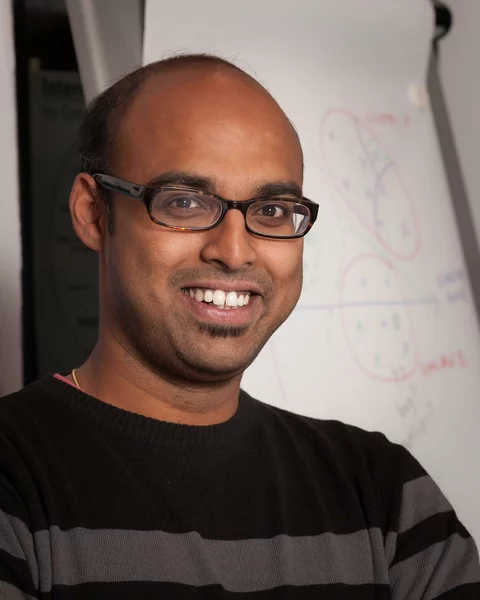
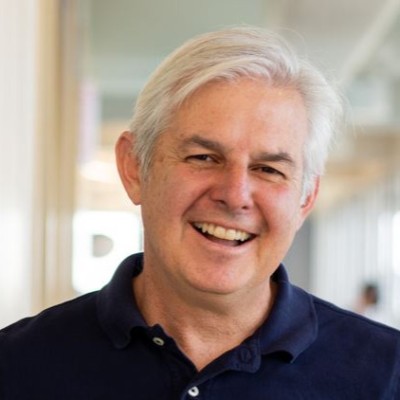
Instructor Team


Abstract
Information continuously evolves over time. Because of this dynamic nature, time becomes a fundamental dimension that shapes how we extract, retrieve, interpret, and reason about knowledge. As information systems are constantly updated, models must determine not only what is relevant, but also when that information is valid. This tutorial provides a structured and in-depth overview of the complete temporal information access pipeline: Temporal Information Extraction (TIE), Temporal Information Retrieval (TIR), and Temporal Question Answering (TQA). We examine the progression of temporal methods from early rule-based extraction and probabilistic retrieval to contemporary transformer-based and large language model (LLM) architectures. Participants gain a solid understanding of the core principles underlying the identification and normalization of time expressions, time-aware document ranking, and temporal reasoning in retrieval-augmented generation (RAG). The tutorial concludes with a discussion of open challenges and future research directions aimed at building AI systems that are temporally aware, robust, and adaptive. By connecting classical extraction and IR foundations with modern LLM-based reasoning, this tutorial presents a cohesive and up-to-date perspective on temporal information systems.
Who Should Attend
Researchers, students, and practitioners in NLP and IR interested in temporally aware LLM and RAG systems. Suitable for introductory to intermediate audiences in both academia and industry. Basic familiarity with language models and information retrieval is expected — the tutorial is otherwise self-contained.
Schedule
Total duration: 3 hours 15 minutes, including a 10-minute Q&A and a 30-minute coffee break.
10 min
1. Introduction & Motivation
Establish why time is a fundamental dimension in how information is generated, retrieved, and interpreted. Presenter: Adam Jatowt- Why time matters in IR and QA: recency, history, periodicity
- How common temporal queries are — explicit vs. implicit intent
- Core challenges: ambiguity, knowledge volatility, uncertainty, retrieval misalignment
Related papers
Survey of Temporal Information Retrieval and Related Applications
· ACM Computing Surveys 2014
On the Value of Temporal Information in Information Retrieval
· SIGIR Forum 2007
15 min
2. Core Concepts & Temporal IR Tasks
Representing, grounding & reasoning over time. Presenter: Bhawna Piryani- Diachronic vs. synchronic collections; corpus and question temporality
- Temporal expressions (absolute, relative, duration, set) and the grounding challenge
- Granularity, temporal proximity, metadata time vs. content/focus time
- Explicit vs. implicit temporal intent; reasoning types (ordering, duration, arithmetic, comparison)
Related papers
Survey of Temporal Information Retrieval and Related Applications
· ACM Computing Surveys 2014
25 min
3. Foundations: Pre-LLM Temporal IR
Rule-based, statistical & ranking methods that laid the groundwork — and the principles that still matter. Presenter: Avishek Anand- Temporal collections and time-travel search over web archives
- Temporal indexing: partitioning, list compression, efficiency trade-offs
- Temporal language models and four-tuple temporal expression models
- Freshness in ranking and temporal diversification
Related papers
Time-Based Language Models
· CIKM 2003
Temporal Ranking of Search Engine Results
· WISE 2005
Index Maintenance for Time-Travel Text Search
· SIGIR 2012
25 min
4. Neural & Transformer-based Temporal Models
How transformer encoders learn — and forget — temporal signals through conditioning, masking, and adaptation. Presenter: Avishek Anand- Timestamp conditioning: reparametrizing P(y|x) as P(y|x,t)
- Architecture & objectives: temporal attention, temporal span masking, document dating
- Temporal grounding for generation; time-aware prompting
- Temporally-aware dense retrieval and fusion strategies
Related papers
Time Masking for Temporal Language Models
· WSDM 2022
BiTimeBERT: Extending Pre-Trained Language Representations with Bi-Temporal Information
· SIGIR 2023
Time-aware Prompting for Text Generation
· EMNLP Findings 2022
10 min
Quick Q&A
Clarify foundational concepts and prepare for the extraction, datasets, and RAG sections. All presenters
30 min
☕ Coffee Break
Informal networking and discussion.
15 min
5. Temporal Information Extraction & Prediction Tasks
Recognizing temporal expressions and inferring missing temporal information from text. Presenter: Bhawna Piryani- Rule-based temporal tagging and TIMEX3 normalization (SUTime, HeidelTime)
- Temponym tagging: temporal scopes for textual phrases
- Evaluation frameworks for temporal information extraction
- Prediction tasks: document dating, focus time estimation, query profiling, event occurrence time
Related papers
HeidelTime: High Quality Rule-Based Extraction and Normalization of Temporal Expressions
· SemEval 2010
Temponym Tagging: Temporal Scopes for Textual Phrases
· WWW 2016 Companion
15 min
6. Temporal QA/IR Datasets
Challenging datasets for temporal QA & IR. Presenter: Adam Jatowt- Landscape of temporal QA benchmarks: sources, construction, answer types, time frames
- Archival and historical QA: ArchivalQA, ChroniclingAmericaQA
- Implicit constraints, ambiguity, and complexity: TIQ, TempAmbiQA, ComplexTempQA, MenatQA
- Reasoning-intensive and recency-aware retrieval: TEMPO, RecencyQA, TRAM, NTCIR Temporalia
Related papers
ArchivalQA: A Large-scale Benchmark Dataset for Open-Domain Question Answering over Historical News Collections
· SIGIR 2022
ChroniclingAmericaQA: A Large-scale Question Answering Dataset based on Historical American Newspaper Pages
· SIGIR 2024
TIQ: A Benchmark for Temporal Question Answering with Implicit Time Constraints
· WWW 2024 Companion
Detecting Temporal Ambiguity in Questions
· EMNLP Findings 2024
MenatQA: A New Dataset for Testing the Temporal Comprehension and Reasoning Abilities of Large Language Models
· EMNLP Findings 2023
TRAM: Benchmarking Temporal Reasoning for Large Language Models
· ACL Findings 2024
15 min
7. Temporal RAG
Coupling neural retrieval with generation to answer questions over evolving knowledge — and where LLMs still fail. Presenter: Adam Jatowt- A taxonomy of temporal QA: intent, information need, reasoning type
- Pre-LLM approaches to QA over archives
- Temporal blind spots and robustness limits of LLMs
- Standard vs. temporal RAG: time-aware retrieval, reranking, and grounded generation
Related papers
Temporal Blind Spots in Large Language Models
· WSDM 2024
A Study into Investigating Temporal Robustness of LLMs
· ACL Findings 2025
MRAG: A Modular Retrieval Framework for Time-Sensitive Question Answering
· EMNLP Findings 2025
FreshLLMs: Refreshing Large Language Models with Search Engine Augmentation
· ACL Findings 2024
15 min
8. Temporal Web & Evaluation Ecosystem
Connecting temporal IR to the evolving Web and the community resources used to evaluate time-aware systems. Presenter: Bhawna Piryani- Dynamic vs. archived Web; link rot and content drift
- Time-travel search over the Internet Archive and the Wayback Machine
- Infrastructure: Memento datetime negotiation, WARC, pywb
- Case study: measuring AI-generated text on the Web through archives
Related papers
10 min
9. Emerging Topics & Open Challenges
Where the field must go next to build temporally aware, trustworthy QA systems. Presenter: Adam Jatowt- Dynamic temporal knowledge management and the update-propagation problem
- Temporal uncertainty, confidence, and implicit intent understanding
- Temporally-aware LLM agents; diachronic–synchronic integration
- Multilingual & multimodal temporal QA; evaluation, contamination, and domain-specific reasoning
Related papers
10 min
10. Concluding Discussion & Q&A
Synthesis of the tutorial and an interactive discussion of open research problems. All presenters- Key takeaways unifying Extraction, Retrieval, and Answering
- From classical temporal IR to temporally robust AI
- Interactive discussion on open research problems
ResourcesTutorial Slides
📜 Survey Paper
Our comprehensive survey of Temporal Question Answering, reviewing over 160 papers.
📚 Paper Collection
A curated repository of papers, datasets, tools, and resources on temporal QA and IR.
ReferenceCitation
Cite the Tutorial
Bhawna Piryani, Avishek Anand, Omar Alonso, and Adam Jatowt. 2026. Temporal Information Retrieval and Extraction: From Foundations to RAG. In Proceedings of the 49th International ACM SIGIR Conference on Research and Development in Information Retrieval (SIGIR '26), July 20–24, 2026, Melbourne, VIC, Australia. ACM, New York, NY, USA, 4 pages. https://doi.org/10.1145/3805712.3808638
@inproceedings{piryani2026temporal,
  title     = {Temporal Information Retrieval and Extraction: From Foundations to RAG},
  author    = {Piryani, Bhawna and Anand, Avishek and Alonso, Omar and Jatowt, Adam},
  booktitle = {Proceedings of the 49th International ACM SIGIR Conference on
               Research and Development in Information Retrieval (SIGIR '26)},
  year      = {2026},
  publisher = {ACM},
  address   = {New York, NY, USA},
  doi       = {10.1145/3805712.3808638}
}
Cite the Survey
@inproceedings{piryani-etal-2026-high,
  title     = {It's High Time: A Survey of Temporal Question Answering},
  author    = {Piryani, Bhawna and Abdallah, Abdelrahman and Mozafari, Jamshid and
               Anand, Avishek and Jatowt, Adam},
  booktitle = {Proceedings of the 64th Annual Meeting of the Association for
               Computational Linguistics (Volume 1: Long Papers)},
  year      = {2026},
  month     = jul,
  address   = {San Diego, California, United States},
  publisher = {Association for Computational Linguistics},
  url       = {https://aclanthology.org/2026.acl-long.1332/},
  doi       = {10.18653/v1/2026.acl-long.1332},
  pages     = {28852--28881}
}