Temporal Information Retrieval and Question Answering in the Age of LLMs
A Comprehensive Tutorial
Bhawna Piryani · Avishek Anand · Adam Jatowt
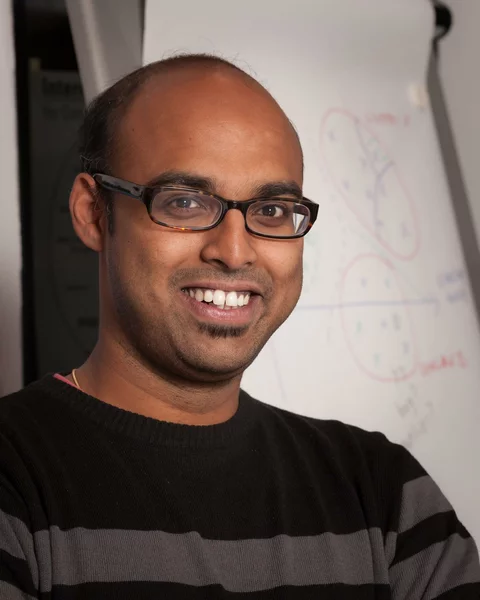
Speakers


Abstract
Time plays a crucial role in how we retrieve, interpret, and reason over information. As knowledge on the Web continuously evolves, information retrieval (IR) and question answering (QA) systems must recognize not only what is relevant but also when it is valid. This tutorial provides a comprehensive overview of Temporal Information Retrieval (TIR) and Temporal Question Answering (TQA), two closely related fields that address temporal relevance, reasoning, and adaptation in information access.
We trace the evolution of temporal methods from early rule-based and probabilistic approaches to modern transformer and large language model (LLM) architectures, highlighting how temporal modeling, reasoning, and retrieval-augmented generation (RAG) are reshaping the field. Participants will learn the fundamental principles of temporal IR/QA, explore pre-LLM and neural methods, and examine recent advances in temporal RAG and temporal reasoning over evolving knowledge.
The tutorial concludes with open challenges and future directions for building temporally robust and adaptive AI systems. By bridging classical IR concepts with modern LLM-based reasoning, this tutorial offers a timely and unified perspective on temporal information access for the evolving Web.
Tutorial Overview
Key Topics Covered
- Fundamentals of Temporal Information Retrieval (TIR)
- Temporal Question Answering (TQA) systems and architectures
- Evolution from rule-based to probabilistic approaches
- Modern transformer and LLM architectures for temporal reasoning
- Temporal modeling and Retrieval-Augmented Generation (RAG)
- Temporal reasoning over evolving knowledge
- Recent advances and benchmarks in temporal IR/QA
- Open challenges and future research directions
Learning Outcomes
- Understand the unique challenges of temporal IR and QA
- Trace temporal methods from classical to modern LLM-based approaches
- Design and implement temporal QA systems using state-of-the-art techniques
- Leverage LLMs and RAG for temporal reasoning tasks
- Evaluate temporal IR and QA systems using standard benchmarks
- Identify promising research directions and open challenges
Target Audience
This tutorial is designed for researchers, practitioners, and graduate students interested in information retrieval, natural language processing, question answering, and large language models. Participants should have basic knowledge of NLP and machine learning concepts.
Schedule
Introduction & Motivation
Focus Why time is fundamental to information access.
- Why information needs and answers depend on time
- Temporal IR, temporal QA, and the broader temporal information landscape
- Temporal ambiguity, volatility, uncertainty, and retrieval misalignment
Core Concepts & Temporal IR Tasks
Focus Canonical temporal concepts, signals, and prediction tasks.
- Diachronic and synchronic collections; temporal expressions and grounding
- Granularity, publication time, focus time, proximity, and temporal intent
- Temporal extraction tools and prediction tasks such as document dating and query profiling
Temporal QA/IR Datasets
Focus Challenging datasets and benchmarks for temporal QA, retrieval, and reasoning.
- Representative temporal QA datasets and their task characteristics
- Historical, implicit-time, recency, ambiguity, and complex-reasoning benchmarks
- Temporal retrieval and reasoning evaluations, including Temporalia and TEMPO
Foundations: Pre-LLM Temporal IR
Focus Rule-based, statistical, indexing, and ranking methods that laid the groundwork.
- Web dynamics, temporal collections, and time-travel search
- Temporal indexing and representations of versioned documents
- Temporal language models, freshness-aware ranking, and diversification
Quick Q&A · 10 min · All Presenters
Questions and discussion on Sections 1–4.
Coffee Break · 15 min
Networking and informal discussion.
Neural & Transformer-based Temporal Models
Focus How neural models learn—and forget—temporal signals.
- Timestamp conditioning and time-aware language models
- Temporal masking, objectives, attention, and architectural inductive biases
- TempoT5, BiTimeBERT, TempRetriever, and temporally aligned dense retrieval
Temporal Web & Evaluation Ecosystem
Focus The evolving Web, Web archives, and resources for evaluating time-aware systems.
- Dynamic versus archived Web, link rot, and content drift
- Time-travel search, the Internet Archive, Wayback Machine, Memento, and WARC
- Archived-Web access, replay tools, applications, and evaluation considerations
Temporal RAG
Focus Retrieval-augmented generation over evolving knowledge.
- Temporal QA taxonomy and pre-LLM archive-based QA
- Standard RAG versus Temporal RAG and time-aware evidence retrieval
- Temporal reasoning, multi-step retrieval, and limitations of current LLM systems
Emerging Topics & Open Challenges
Focus Research directions toward temporally robust and trustworthy AI.
- Dynamic temporal knowledge management and continual updating
- Temporal uncertainty, confidence, agents, and evaluation
- Domain-specific temporal intelligence and future research opportunities
Concluding Discussion & Q&A
Focus Synthesis of the tutorial and interactive discussion.
- Key takeaways from temporal intent and grounding to retrieval, reasoning, and RAG
- From classical temporal IR toward robust, continually updated temporal AI
- Open questions and discussion with participants
Tutorial Materials
Access the tutorial slides by section, watch the video teaser, and read the survey that forms the foundation of this tutorial.
Watch the Tutorial Teaser
A concise introduction to the tutorial scope, motivation, and main themes.
It's High Time: A Survey of Temporal Question Answering
The tutorial builds on this comprehensive survey of temporal QA datasets, methods, reasoning types, evaluation, and open challenges.
Additional Resources
Temporal QA & IR Paper Collection
Explore our curated GitHub repository of papers, datasets, tools, benchmarks, and other resources related to temporal information retrieval and temporal question answering.
Contact
📧 bhawna.piryani@uibk.ac.at — Bhawna Piryani
📧 avishek.anand@tudelft.nl — Avishek Anand
📧 adam.jatowt@uibk.ac.at — Adam Jatowt